Tag: artificial intelligence

  • Group Coaching and Customizations – Our Minimum Delivery Standards

    Group Coaching and Customizations – Our Minimum Delivery Standards

    The Prerequisite for Practice

    When organizations embark on change initiatives, training often becomes the default destination—a checkbox to mark complete before moving on. But in the ATCM model, Training (the “T”) serves a fundamentally different purpose: it’s the prerequisite for practice, not the end goal.

    This distinction matters more than you might think. When we treat training as the finish line, we burden employees with exhaustive content dumps, marathon workshops, and information overload that leaves them too fatigued to actually apply what they’ve learned.


    The Problem with Traditional Training Approaches

    Let’s be honest about what’s broken:

    Cognitive overload is real. Research consistently shows that our working memory can only hold so much before new information starts pushing out what we just learned. Yet traditional training programs routinely ignore this, cramming hours of content into single sessions.

    Change fatigue compounds the problem. Your employees aren’t just dealing with this training—they’re navigating competing priorities, ongoing operational demands, and often multiple change initiatives simultaneously. Every minute spent in non-essential training is a minute stolen from meaningful work.

    The forgetting curve is unforgiving. Within 24 hours, people forget approximately 70% of new information. Within a week, that number climbs to 90%. So why do we design training as if a single exposure creates lasting competence?


    eTrainers.org’s eLearning Approach

    The solution isn’t more training—it’s smarter, more purposeful training that respects both cognitive science and business realities.

    Microlearning: The Foundation Framework

    Instead of comprehensive courses that cover everything, purposive eLearning focuses on delivering the basic framework—the essential knowledge scaffolding employees need to begin practicing effectively.

    Think of it this way: you don’t need to memorize an entire cookbook to make dinner. You need to understand basic cooking principles and have a recipe handy. Training should provide the principles; practice develops the expertise.

    Effective microlearning modules:

    • Target 5-15 minutes of focused learning
    • Address one concept or skill at a time
    • Provide immediate relevance to daily work
    • Create space for reflection and application

    Right-Sizing Content to Business Impact

    Not all knowledge carries equal weight. Purposive eLearning demands that we ruthlessly prioritize:

    High PriorityLower Priority
    Skills directly tied to workflow changesBackground theory and history
    Decision-making frameworksEdge cases and exceptions
    Core processes and protocolsNice-to-know supplementary content
    Compliance essentialsAdvanced techniques (save for later)

    By focusing training on high-impact workflow redesign, organizations ensure employees spend their learning energy where it matters most.


    Strategic Benefits of Purposive Training

    1. Preserved Energy for Practice

    When training is lean and focused, employees arrive at the practice phase with mental bandwidth intact. They’re ready to experiment, make mistakes, and build genuine competence—rather than simply trying to remember what they learned in a three-hour webinar.

    2. Faster Time to Application

    Microlearning modules can be deployed rapidly and consumed immediately before task execution. This “just-in-time” approach closes the gap between learning and doing, dramatically improving retention and transfer.

    3. Reduced Resistance to Change

    Change fatigue often masquerades as resistance. When employees face yet another lengthy training requirement, their pushback isn’t about the content—it’s about the burden. Purposive eLearning respects their time and intelligence, reduces friction, and builds goodwill.

    4. Measurable Business Outcomes

    Because purposive training ties directly to specific workflow changes, its impact becomes measurable. You can track whether employees successfully apply the framework in practice, rather than simply whether they completed a course.


    Building Your Purposive Learning Strategy

    Ready to transform your approach to the Training phase? Here’s where to start:

    Audit existing training for content that doesn’t directly support immediate application. Archive it for reference, but remove it from required learning paths.

    Map training to specific practice scenarios. Every module should answer: “What will the learner do differently after this?”

    Embrace flexibility. Self-paced, device-agnostic learning allows employees to engage when their cognitive resources are highest—not when a calendar invite demands it.

    Support hybrid and remote realities. Today’s workforce needs training that travels with them, accessible on any device, at any time.


    The Bottom Line

    Training isn’t transformation—it’s preparation. When we design the “T” phase of ATCM with this understanding, we create learning experiences that energize rather than exhaust, that focus rather than overwhelm, and that ultimately serve the business outcomes we’re chasing.

    The goal isn’t employees who’ve completed training. It’s employees who are ready to practice.


    Ready to Build a Smarter Training Library?

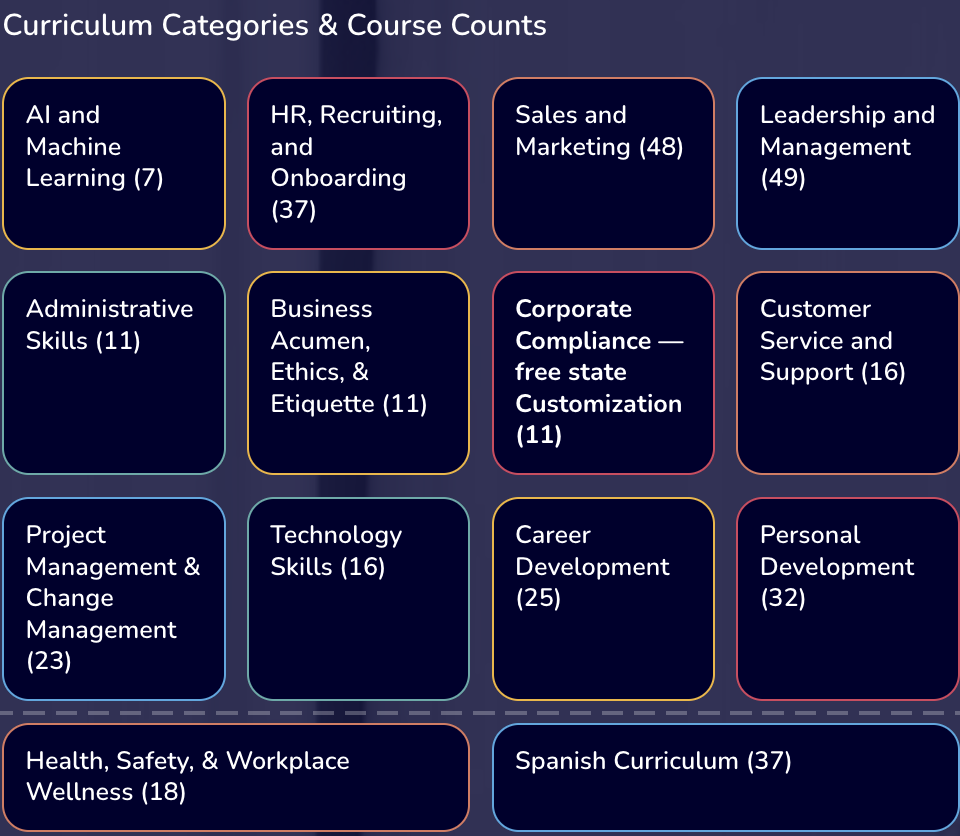
    Transform your workforce with affordable, focused learning solutions. The eTrainers.org Learning Solutions Library offers unlimited access to over 340 courses across today’s most in-demand competencies—from AI and machine learning to leadership, compliance, and beyond.

    At just $19.99/month per user, your team gets:

    ✓ Self-paced, microlearning-friendly content

    ✓ Flexible access on any device

    ✓ Categories spanning leadership, technology, project management, and more

    ✓ Solutions for enterprise, SMB, government, and nonprofit sectors

    Explore the Learning Solutions Library →

    Stop training for training’s sake. Start building the purposeful foundation your workforce needs to practice, adapt, and excel.

  • The Complete Guide to Measuring Training Effectiveness

    The Complete Guide to Measuring Training Effectiveness

    eTrainers.org Launches Revolutionary ATCM Model to Transform Professional Development

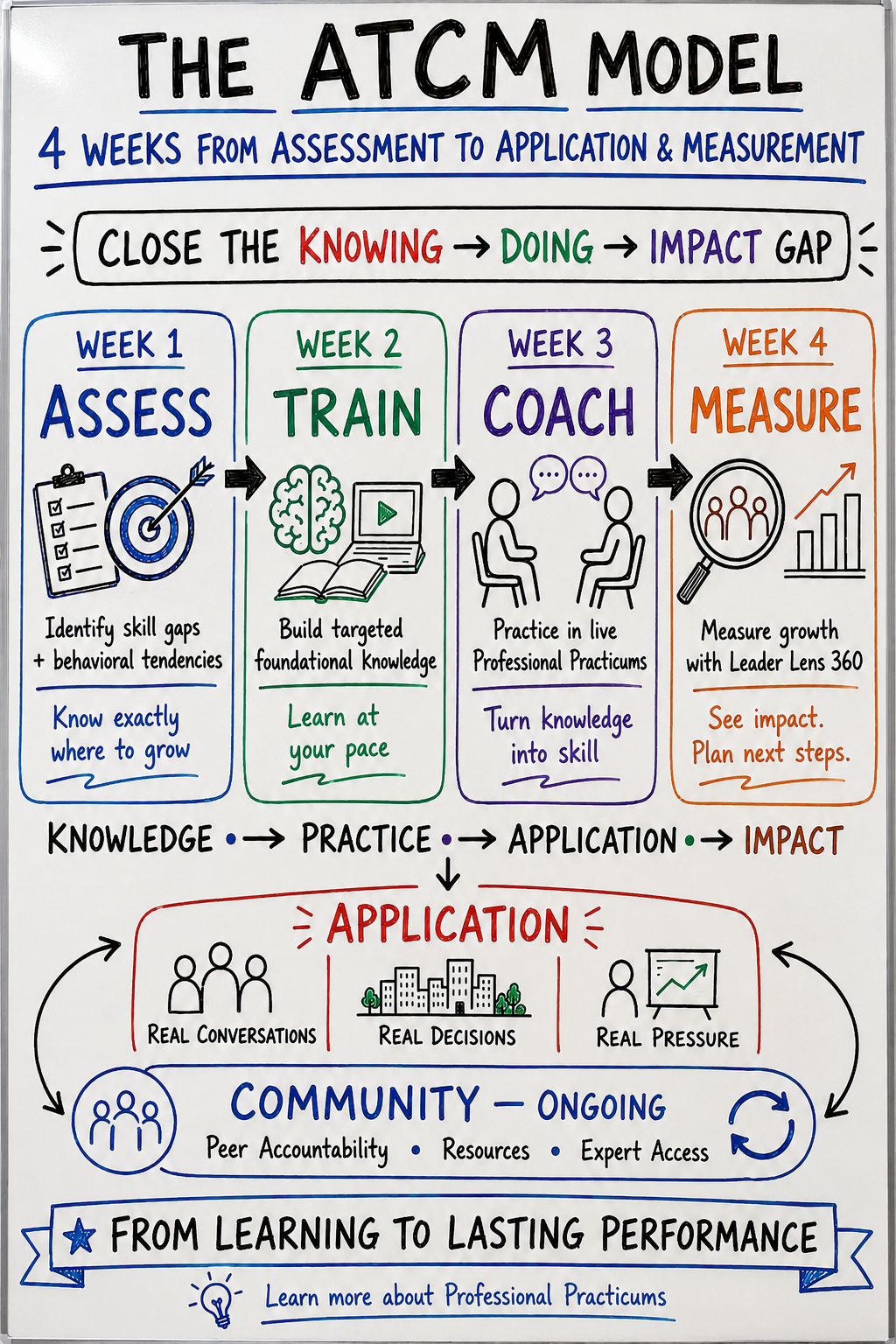
    September 8, 2026 – eTrainers.org is excited to announce the official launch of the ATCM Model, a comprehensive four-phase framework designed to revolutionize how organizations approach employee training and professional development when measuring training effectiveness.

    Introducing the Assess – Train – Coach – Measure Model

    The ATCM Model provides a structured, cyclical approach to learning and development that ensures continuous improvement and measurable results. The four pillars of the framework include:

    • Assess – Evaluate current skill levels, identify gaps, and establish baseline performance metrics to create targeted development plans
    • Train – Deliver customized learning experiences and educational content tailored to address identified needs
    • Coach – Provide ongoing support, mentorship, and real-time guidance to reinforce training and support practical application
    • Measure – Track progress, evaluate outcomes, and analyze data to demonstrate ROI and inform future development cycles

    A Holistic Approach to Learning

    “Traditional training programs often fail because they lack follow-through and accountability,” said a spokesperson for eTrainers.org. “The ATCM Model closes the loop by integrating assessment, training, coaching, and measurement into one continuous cycle. This ensures that learning translates into real-world performance improvements.”

    Why ATCM?

    Organizations implementing the ATCM Model can expect:

    • Higher training ROI through targeted interventions
    • Improved employee performance with ongoing coaching support
    • Data-driven insights to guide future development investments
    • Sustainable growth through continuous feedback loops

    Availability

    The ATCM Model launches on September 8, 2026, and will be available to organizations of all sizes. For more information about implementation, certifications, and resources, visit eTrainers.org.


    Media Contact:
    eTrainers.org
    Email: info@etrainers.org
    Website: www.etrainers.org


    Book a 15-minute session to learn more.

    Home » artificial intelligence
  • Proven AI Literacy for Leaders: What Models Miss

    Proven AI Literacy for Leaders: What Models Miss


    The most important resource in any organization isn’t technology. It’s you.

    We are living in an extraordinary moment.

    AI is reshaping industries, redefining workflows, and revolutionizing how we process information.

    Smart leaders pay attention to that.

    Literacy isn’t optional anymore.

    Understanding how these tools work is essential. They show what they can do and where they fit into your organization.

    That is part of leading well in the 21st century.

    However, here’s what I need you to understand. AI is central to this.

    AI literacy isn’t just about learning the technology.

    It’s about remembering your humanity.

    Moreover, for everything AI can do, there is a vast, irreplaceable leadership territory that belongs to you. Leaders who thrive now won’t be the ones who simply use technology best. They’ll be the ones who understand what technology cannot touch.

    Let’s talk about what that looks like.


    1. AI Can Process Information. Only You Can Build Trust.

    A machine can analyze a thousand data points in seconds.

    AI complements this ability by identifying patterns, generating reports, and predicting trends with accuracy.

    However, a machine has never looked someone in the eye during their worst moment.

    It has never said, ‘I believe in you. We’re going to get through this together’.

    Trust isn’t built through efficiency.

    Trust is built through presence, consistency, and genuine care.

    It’s built in hallway conversations.

    The difficult feedback delivered with love matters.

    Moments when you choose your people over your convenience define trust.

    People don’t follow algorithms. People follow leaders they trust. And trust is currency that only humans can earn.

    As a leader, your invitation is this: don’t let technology speed up at the expense of relationships. Moreover, AI-driven change makes your willingness to slow down and connect one of your greatest competitive advantages.


    2. AI Can Generate Ideas. Only You Can Cast a Vision.

    I’ve seen AI produce impressive content — strategies, plans, even creative concepts. But there’s a profound difference between generating ideas and casting a vision that moves people to sacrifice for something greater than themselves.

    Vision isn’t a product of computation. It’s born in the soul of a leader who has wrestled with purpose, asked hard questions in quiet moments, and emerged with a burning conviction about what could be.

    When Martin Luther King Jr. stood before a nation and said, “I have a dream,” he wasn’t reciting data.

    He issued an invitation. It invited steps into a future that didn’t yet exist, fueled by hope and shared humanity.

    No machine could have written that moment.

    That moment required a man who had suffered and struggled, and who believed enough to stand.

    In an era of AI, human courage remains essential.

    Your vision carries weight because you carry weight. Your story, your scars, your convictions — these are the ingredients of vision that actually move people. AI can give you information. Only you can give your team inspiration.


    3. AI Can Identify a Problem. Only You Can Exercise Moral Courage.

    Here’s a leadership truth that has never changed and never will: doing the right thing is rarely the easy thing.

    AI can flag an ethical concern. It can present options. It can even recommend a course of action based on programmed values. But AI cannot choose to do what is right when doing what is right costs something. It cannot feel the weight of a difficult decision. It cannot carry the responsibility of leading people through an ethical crisis with both firmness and grace.

    Moral courage — the willingness to stand for what is right even when it’s uncomfortable, unpopular, or costly — is one of the defining marks of great leadership. And it is entirely, exclusively human.

    The world doesn’t need more leaders who know the right answer. The world needs leaders who have the courage to act on the right answer. That’s your territory. Own it.


    4. AI Can Optimize Performance. Only You Can Develop People.

    I have spent decades studying leadership, and I am more convinced today than ever before: the greatest thing a leader can do is grow another leader.

    AI can track performance metrics. It can identify skill gaps and recommend training programs. It can personalize learning pathways with impressive precision. But it cannot sit across from a young leader who is doubting themselves and see in them what they cannot yet see in themselves. It cannot invest in someone not because of what they produce, but because of who they are.

    People development is an act of love. It requires patience, discernment, and an unwavering belief in human potential. It requires you to notice the quiet person in the room, ask the question nobody else thought to ask, and say “I see something in you”—and mean it.

    Your greatest legacy will never be measured in revenue generated or problems solved. It will be measured in the leaders you raised up who went on to change the world in ways you’ll never fully know. AI can never leave that kind of legacy. But you can.


    5. AI Can Respond. Only You Can Empathize.

    Empathy is not a soft skill. It is a leadership superpower — and it is one that AI can only simulate, never possess.

    When someone on your team loses a parent, faces a health crisis, or shows up carrying a weight you can’t see — what they need isn’t a perfectly crafted response generated in milliseconds. What they need is a leader who is fully present, who genuinely feels the gravity of the moment, and who responds not from a script, but from the heart.

    Empathy changes people. It says, “You are not just a resource to be managed. You are a human being who matters.” And when people feel that — truly feel it — they don’t just work for you. They believe in what you’re building together.

    In a world increasingly mediated by screens and automated responses, your empathy is revolutionary. Don’t minimize it. Develop it. Lean into it. It may be the most distinctly human — and distinctly powerful — thing you bring to your leadership every single day.


    So What Does This Mean for You?

    AI literacy for leaders isn’t a warning — it’s an invitation. An invitation to get clear on what makes you irreplaceable.

    Yes, learn the tools. Understand how AI works. Use it to free up your time, sharpen your thinking, and scale your impact. Absolutely. That’s wisdom.

    But never — never — outsource the things that only you can give:

    • Your trust-building presence
    • Your vision-casting conviction
    • Your moral courage
    • Your investment in people
    • Your empathy

    These are not things a machine will ever replicate. These are the marks of a leader who understands that technology is a tool, but people are the point.


    Here’s the truth I want to leave with you today: The rise of AI is not a threat to great leadership. It is a clarion call to it.

    The world doesn’t need leaders who can keep up with machines. The world needs leaders who are more human than ever — more present, more courageous, more connected to purpose, and more committed to the people in their care.

    That’s your moment. And I believe that you are ready for it.

    Leadership is not about being the smartest person in the room. It’s about bringing out the best in every person in the room — and that is something no machine will ever do better than you.

    Download our free AI Resources for Leaders.

    Home » artificial intelligence