The Prerequisite for Practice
When organizations embark on change initiatives, training often becomes the default destination—a checkbox to mark complete before moving on. But in the ATCM model, Training (the “T”) serves a fundamentally different purpose: it’s the prerequisite for practice, not the end goal.
This distinction matters more than you might think. When we treat training as the finish line, we burden employees with exhaustive content dumps, marathon workshops, and information overload that leaves them too fatigued to actually apply what they’ve learned.
The Problem with Traditional Training Approaches
Let’s be honest about what’s broken:
Cognitive overload is real. Research consistently shows that our working memory can only hold so much before new information starts pushing out what we just learned. Yet traditional training programs routinely ignore this, cramming hours of content into single sessions.
Change fatigue compounds the problem. Your employees aren’t just dealing with this training—they’re navigating competing priorities, ongoing operational demands, and often multiple change initiatives simultaneously. Every minute spent in non-essential training is a minute stolen from meaningful work.
The forgetting curve is unforgiving. Within 24 hours, people forget approximately 70% of new information. Within a week, that number climbs to 90%. So why do we design training as if a single exposure creates lasting competence?
eTrainers.org’s eLearning Approach
The solution isn’t more training—it’s smarter, more purposeful training that respects both cognitive science and business realities.
Microlearning: The Foundation Framework
Instead of comprehensive courses that cover everything, purposive eLearning focuses on delivering the basic framework—the essential knowledge scaffolding employees need to begin practicing effectively.
Think of it this way: you don’t need to memorize an entire cookbook to make dinner. You need to understand basic cooking principles and have a recipe handy. Training should provide the principles; practice develops the expertise.
Effective microlearning modules:
- Target 5-15 minutes of focused learning
- Address one concept or skill at a time
- Provide immediate relevance to daily work
- Create space for reflection and application
Right-Sizing Content to Business Impact
Not all knowledge carries equal weight. Purposive eLearning demands that we ruthlessly prioritize:
| High Priority | Lower Priority |
|---|---|
| Skills directly tied to workflow changes | Background theory and history |
| Decision-making frameworks | Edge cases and exceptions |
| Core processes and protocols | Nice-to-know supplementary content |
| Compliance essentials | Advanced techniques (save for later) |
By focusing training on high-impact workflow redesign, organizations ensure employees spend their learning energy where it matters most.
Strategic Benefits of Purposive Training
1. Preserved Energy for Practice
When training is lean and focused, employees arrive at the practice phase with mental bandwidth intact. They’re ready to experiment, make mistakes, and build genuine competence—rather than simply trying to remember what they learned in a three-hour webinar.
2. Faster Time to Application
Microlearning modules can be deployed rapidly and consumed immediately before task execution. This “just-in-time” approach closes the gap between learning and doing, dramatically improving retention and transfer.
3. Reduced Resistance to Change
Change fatigue often masquerades as resistance. When employees face yet another lengthy training requirement, their pushback isn’t about the content—it’s about the burden. Purposive eLearning respects their time and intelligence, reduces friction, and builds goodwill.
4. Measurable Business Outcomes
Because purposive training ties directly to specific workflow changes, its impact becomes measurable. You can track whether employees successfully apply the framework in practice, rather than simply whether they completed a course.
Building Your Purposive Learning Strategy
Ready to transform your approach to the Training phase? Here’s where to start:
Audit existing training for content that doesn’t directly support immediate application. Archive it for reference, but remove it from required learning paths.
Map training to specific practice scenarios. Every module should answer: “What will the learner do differently after this?”
Embrace flexibility. Self-paced, device-agnostic learning allows employees to engage when their cognitive resources are highest—not when a calendar invite demands it.
Support hybrid and remote realities. Today’s workforce needs training that travels with them, accessible on any device, at any time.
The Bottom Line
Training isn’t transformation—it’s preparation. When we design the “T” phase of ATCM with this understanding, we create learning experiences that energize rather than exhaust, that focus rather than overwhelm, and that ultimately serve the business outcomes we’re chasing.
The goal isn’t employees who’ve completed training. It’s employees who are ready to practice.
Ready to Build a Smarter Training Library?
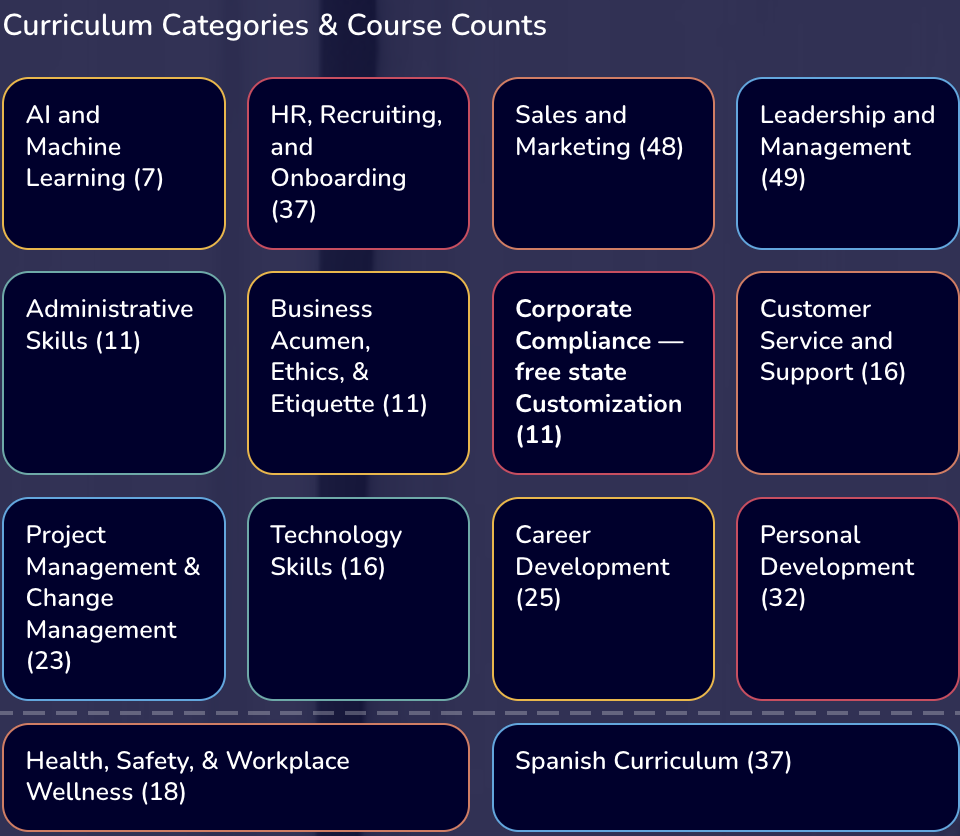
Transform your workforce with affordable, focused learning solutions. The eTrainers.org Learning Solutions Library offers unlimited access to over 340 courses across today’s most in-demand competencies—from AI and machine learning to leadership, compliance, and beyond.
At just $19.99/month per user, your team gets:
✓ Self-paced, microlearning-friendly content
✓ Flexible access on any device
✓ Categories spanning leadership, technology, project management, and more
✓ Solutions for enterprise, SMB, government, and nonprofit sectors
Explore the Learning Solutions Library →
Stop training for training’s sake. Start building the purposeful foundation your workforce needs to practice, adapt, and excel.